Recyclers
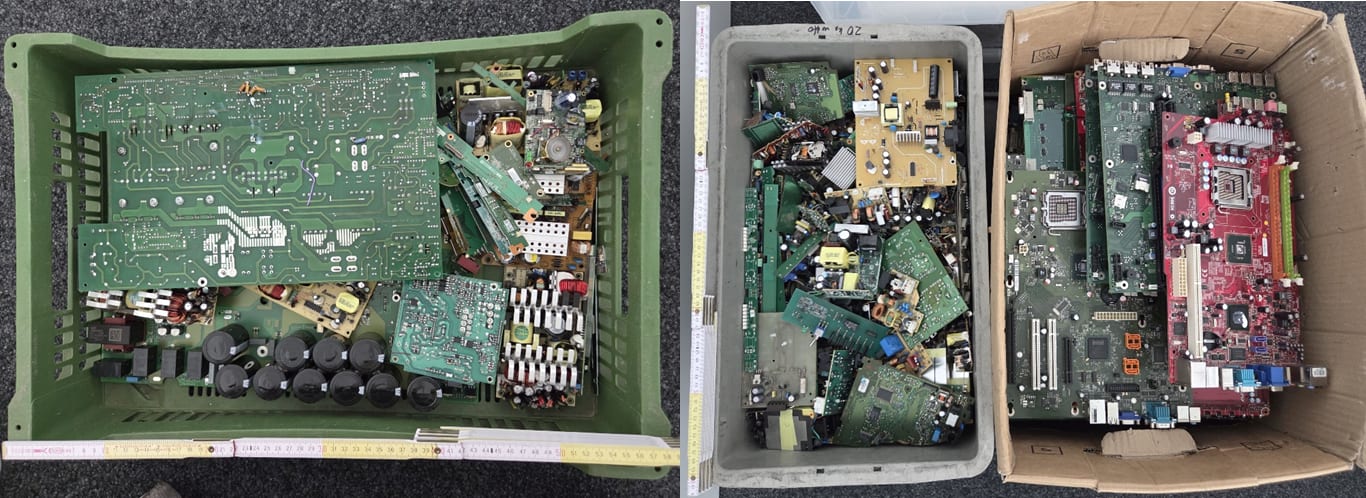
Collect and shred e-waste at scale, then hand it on.
Pyrometallurgy downstream sends the critical metals straight to slag.
We recover base, precious, and critical metals from electronic waste with selective processes developed at the Helmholtz Institute Freiberg for Resource Technology.
Metal concentrate · Tantalum · Gallium · Titanium · Indium
The problem
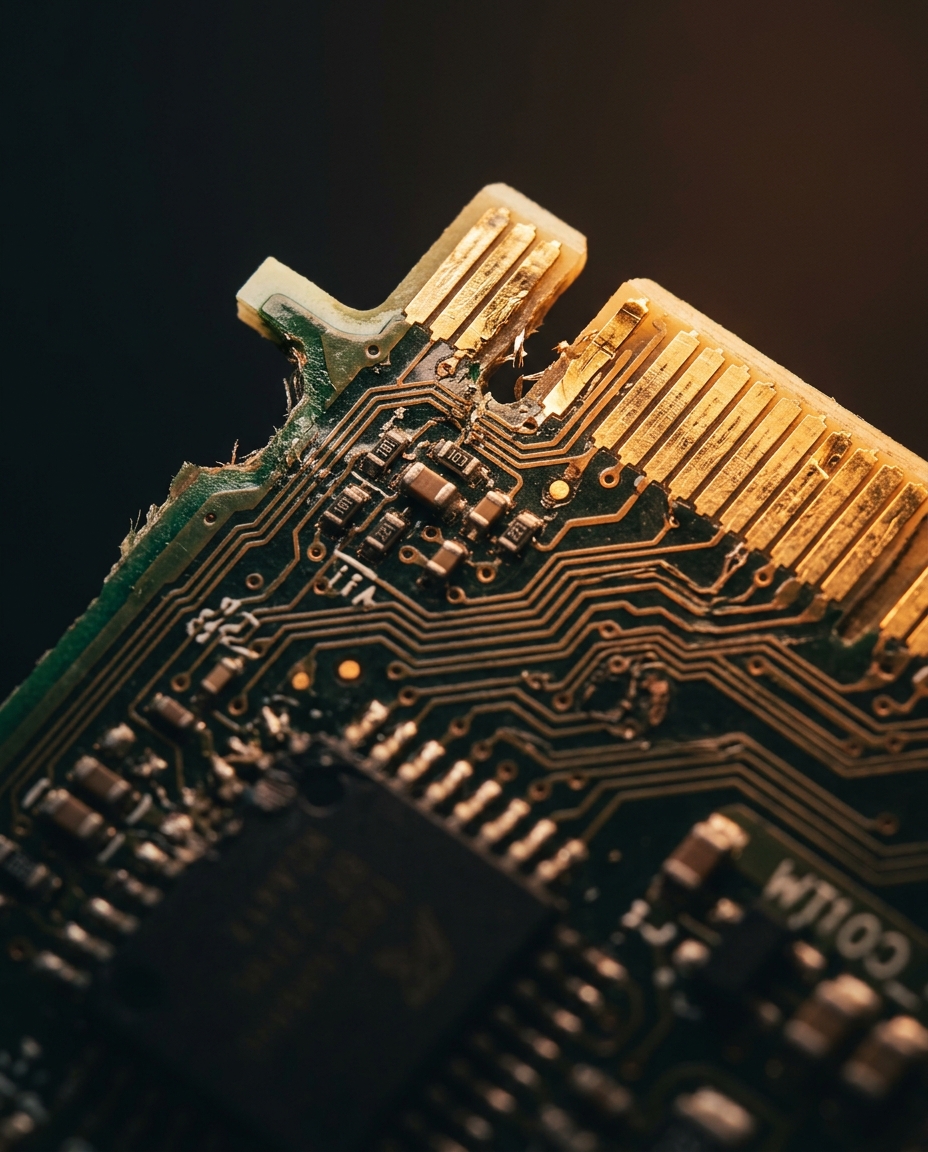
Europe imports almost all of the critical raw materials it uses. Meanwhile, the same metals sit in its own electronic waste: already collected, already on European soil. Almost none of them are recovered. Most end up in slag, landfill or exports.
Of US$91 bn in metals, less than a third comes back.
Recovered
US$28 bn
31% of the value
Recycled into secondary raw materials
Not recovered
US$62 bn
69% of the value
Landfilled, incinerated or informally processed
Source: UN Global E-waste Monitor 2024. Figures rounded as published.
Critical metals in e-waste
Present in small amounts, spread across the displays, capacitors and chips of the devices that reach recyclers.
The value chain gap
Everyone in Europe's chain does their job well, yet tantalum, titanium and indium still slip through every handover.
Collect and shred e-waste at scale, then hand it on.
Pyrometallurgy downstream sends the critical metals straight to slag.
Recover copper, gold and silver efficiently and at volume.
Everything outside that window passes through the furnace uncaptured.
Have the capacity to refine tantalum, titanium and indium.
They need high-purity concentrates that barely exist at scale in Europe.
WEEEfficient
Low-grade boards in from recyclers. Three graded concentrate streams out to smelters and refiners, including the critical metals that never made it out of the furnace before.
Newly captured
How it works
Three selective, low-temperature processes, each matched to a different part of the e-waste stream and each delivering a concentrate that refiners can use.
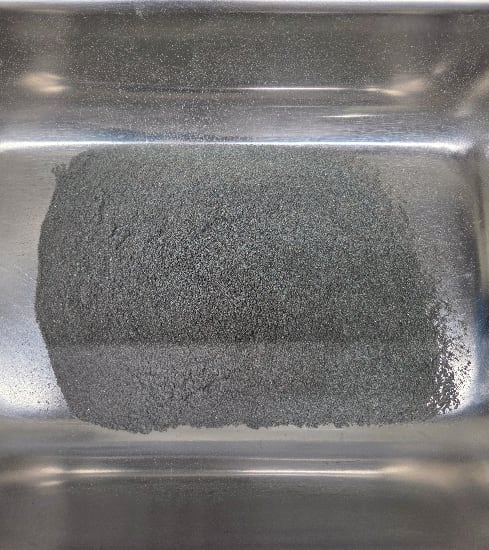
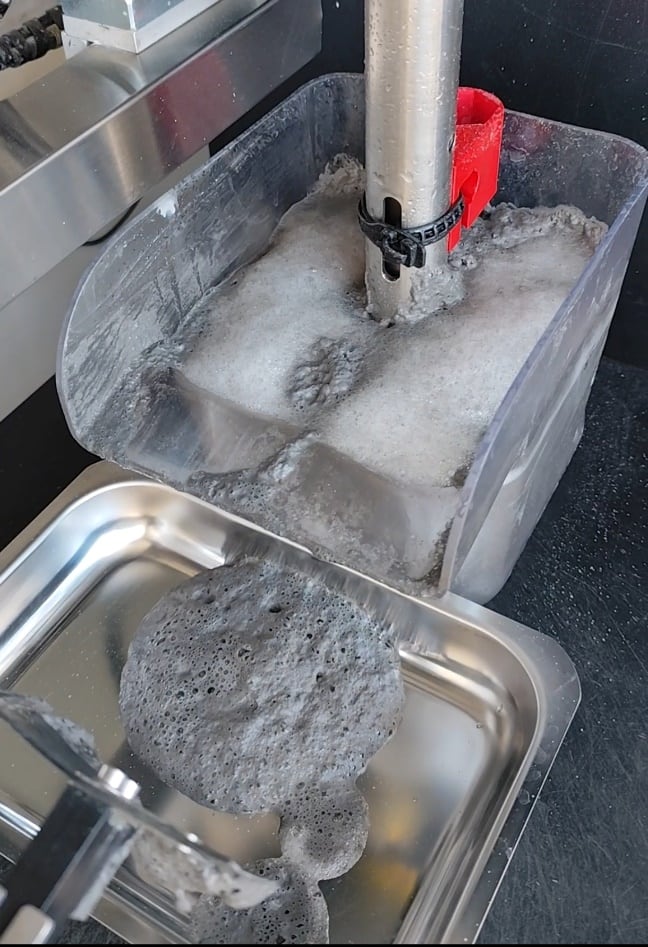
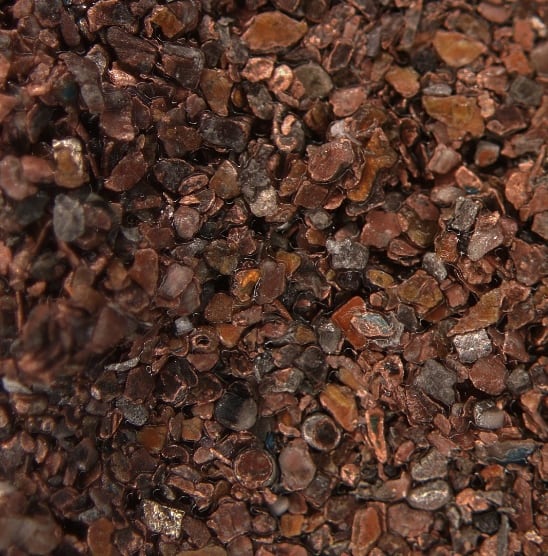
Froth flotation
Input Shredded printed circuit boards
Froth flotation separates precious and base metals from the plastic and ceramic fraction of circuit boards.
The result is one dense metal concentrate.
Proven on industrial e-waste. Ready to test on yours.
 In development
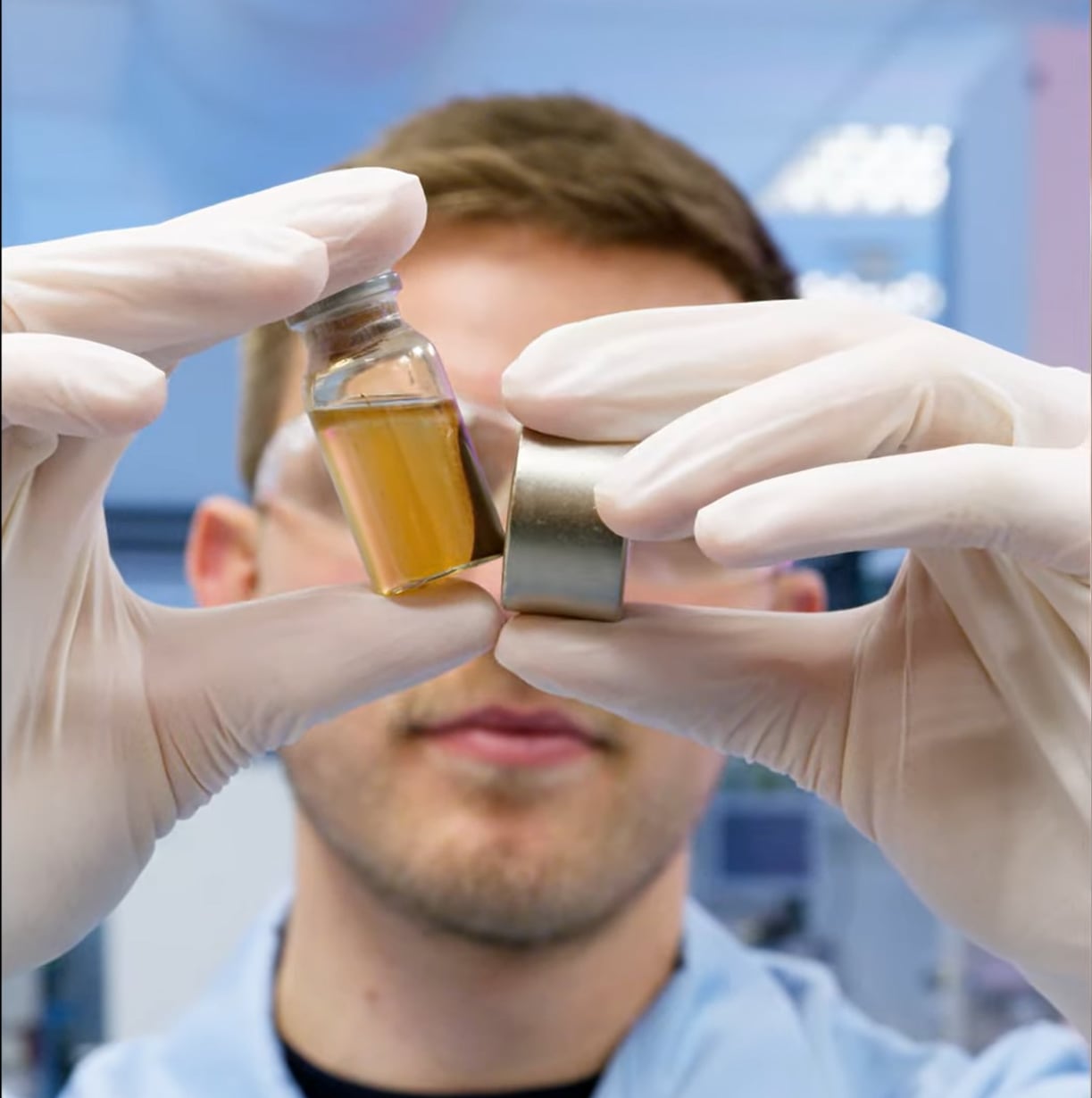
Selective carrier magnetic separation
Input Flotation tailings from circuit boards
Our selective magnetic separation process recovers tantalum, titanium and rare earth elements.
These are critical metals that conventional smelting loses to slag.
Recovering what smelters can't.
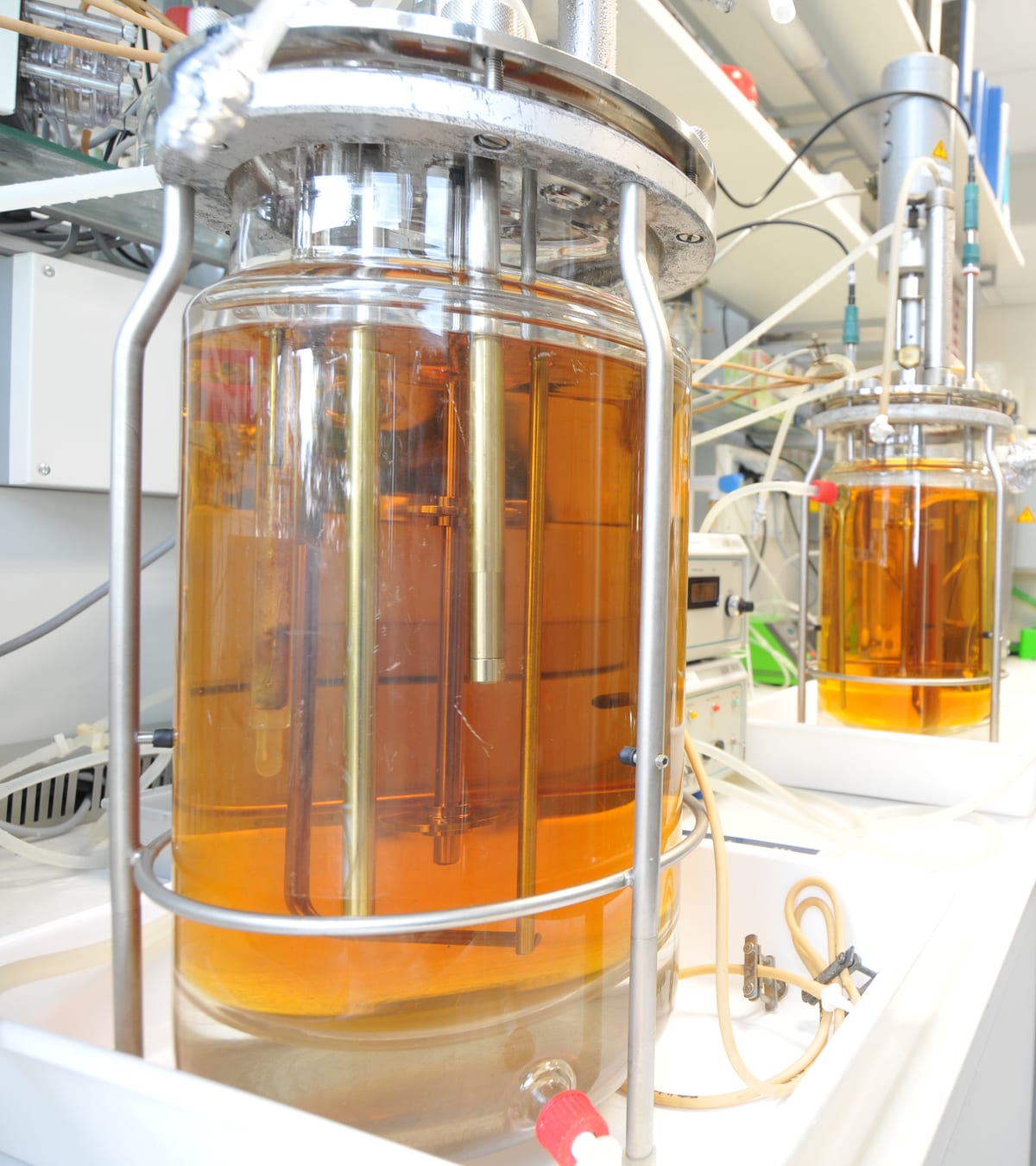 © HZDR / Frank Bierstedt Ready for partner trials
Bacteria-assisted leaching
Input Tailings from flotation and MAGSEL · display screen glass
Bacteria selectively dissolve the gold and precious metals left in flotation and MAGSEL tailings.
They also recover indium from end-of-life display glass.
Microbes recover what the other processes leave behind.
Results
Different tests, one outcome: we recover what conventional recycling loses.
Lab-scale results on end-of-life e-waste, not modelled projections.
Why WEEEfficient
Flotation turns bulky low-grade boards into a small, rich concentrate.
Less mass to ship and pay treatment fees on, and better payables for the metal inside.
Tantalum, titanium and indium end up in slag or landfill today.
Our processes are built to capture them.
All three processes run at low temperature — no furnaces.
Selective separation and bacteria replace heat.
Recyclers send us the low-grade boards and screens they already collect.
Refiners get feed they can actually use. No chain rebuild required.
Team
Engineers and scientists from the Helmholtz Institute Freiberg for Resource Technology, now taking the technologies they developed in the lab to industry.
Ali Hassan
CEO & Co-founder
Strategy, partnerships & funding
Zahra Nourizenouz
Chief Product Officer
Process integration & scale-up

Emma Pustlauk
Co-founder & Lead Scientist
MAGSEL
Himanshu Kachroo
Lead Scientist
Biohydrometallurgy
Lakshmi Viswamsetty
Lead Scientist
Metallurgy & flotation

Dominic Illing
Lead Engineer
Mechanical processing
Roadmap
From lab-proven processes to technology running at recyclers and refiners across Europe.
Support
Federal Agency for Breakthrough Innovation


Helmholtz Institute Freiberg for Resource Technology, part of the Helmholtz-Zentrum Dresden-Rossendorf.

HZDR Innovation GmbH is the technology-transfer company of the Helmholtz-Zentrum Dresden-Rossendorf, turning its research into products, licences and spin-offs.
Funding
WEEEfficient is funded by SPRIND through the Tech Metal Transformation Challenge, which supports technologies that turn secondary sources into critical metal supply for Europe.
In the press
Articles and broadcast coverage of our funding and the technology behind it.
 Freie Presse 07 Jan 2026 Metallrückgewinnung aus Elektroschrott Metal recovery from e-waste: a million-euro research grant for Freiberg scientists.
Read
 chemeurope.com 07 Jan 2026 Huge opportunity for the recovery of technology metals Freiberg researchers secure innovation funding for e-waste recycling.
Read
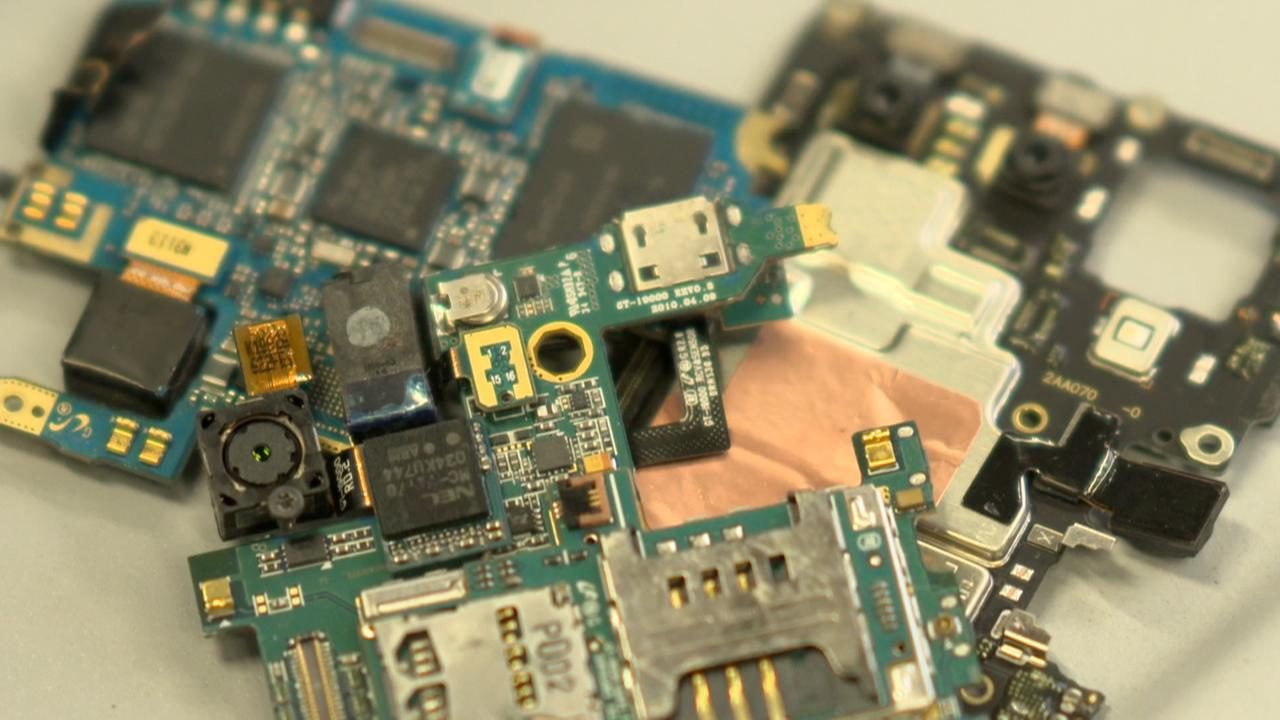 © ZDF-Morgenmagazin ZDF-Morgenmagazin 28 Apr 2026 moma future: Handy-Recycling How researchers recover the metals inside old phones.
Watch
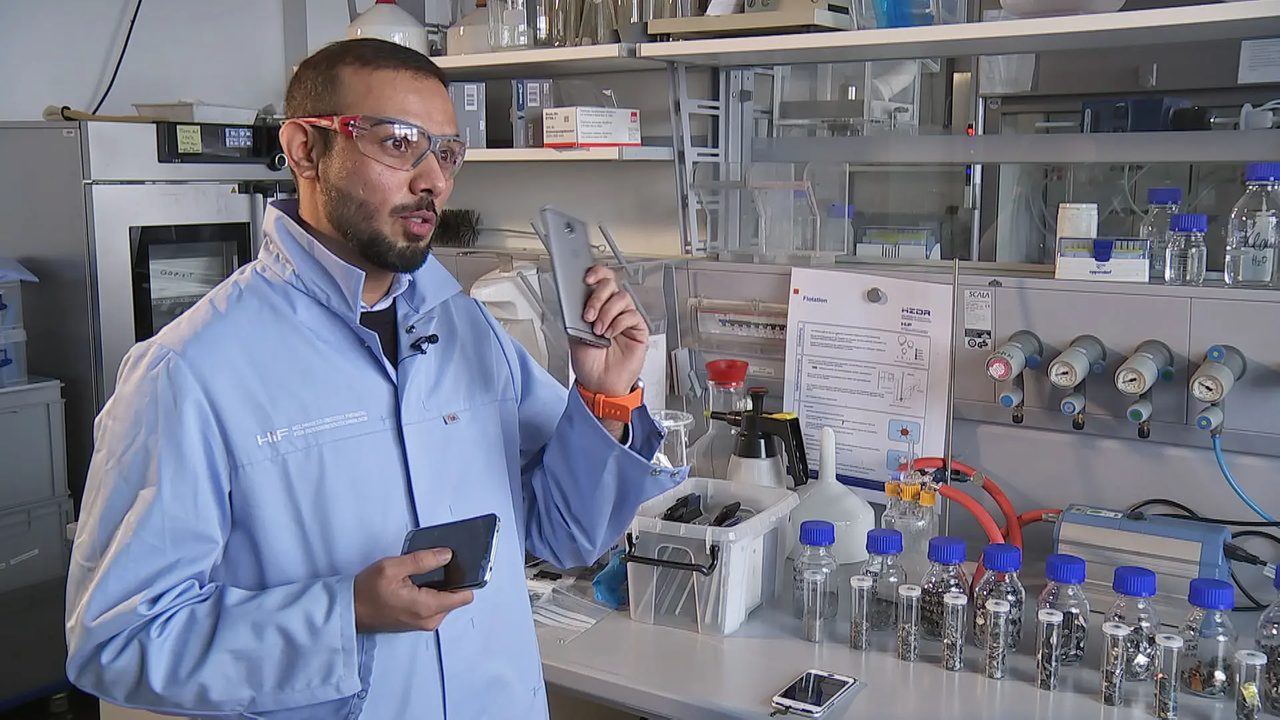 © MDR SACHSENSPIEGEL MDR SACHSENSPIEGEL 29 Jan 2026 Freiberger Forscher entwickeln Methode zum Recycling wertvoller Rohstoffe Inside the HIF lab: the process that recovers valuable metals from old phones.
Watch
 diesachsen.de 07 Jan 2026 Freiberger Team holt Millionenförderung A Freiberg team wins million-euro funding for clever phone recycling.
Read
 oiger.de 07 Jan 2026 Häcksel-Schaum-Magnet-Maschine aus Sachsen A shred–froth–magnet machine from Saxony that pulls gold and rare earths out of e-waste.
Read
 freiberg.de 09 Jan 2026 Riesenchance für die Rückgewinnung von Technologiemetallen The city of Freiberg on the team’s SPRIND funding.
Read
 konstruktionspraxis 12 Jan 2026 Technologiemetalle aus Elektroschrott rückgewinnen Trade press on the three-stage process for recovering technology metals.
Read
FAQ
Anything else, or something specific to your feedstock? Talk to us directly.
WEEEfficient is a German company that recovers precious and critical metals from electronic waste. It was founded in 2026 as a spin-off from the Helmholtz Institute Freiberg for Resource Technology, part of the Helmholtz-Zentrum Dresden-Rossendorf, and is funded by SPRIND through the Tech Metal Transformation Challenge.
WEEE stands for Waste Electrical and Electronic Equipment, the EU term for e-waste. Combined with 'efficient', the name reflects the company's aim: recovering more value from e-waste, with selective, low-temperature processes.
WEEEfficient is based in Freiberg, Saxony, Germany.
All three processes are validated at lab scale on real end-of-life e-waste, including printed circuit boards, capacitors and display glass. The next step is partner trials on industry material, ahead of a pilot line.
Recyclers: material trials and toll-processing agreements. Refiners: offtake for our concentrates. Funders and investors: we're always happy to talk about our progress and plans.
WEEEfficient recovers precious, base and critical metals. Flotation concentrates the precious and base metals (gold, silver, palladium, copper, tin and zinc). The critical metals tantalum, titanium and rare earth elements are captured by MAGSEL selective carrier magnetic separation. Residual gold, indium and gallium are recovered in the final biohydrometallurgy stage.
Pyrometallurgy is very good at copper, gold and silver, and sends tantalum, titanium and indium straight to the slag pile. Our three low-temperature processes capture those critical metals instead, and produce concentrates a smelter or refiner can take directly.
Low-grade printed circuit boards contain mostly plastic and little metal, so they are expensive to ship and earn low payments from smelters. WEEEfficient uses froth flotation to separate the metals from the plastic, turning low-grade boards into a small, rich concentrate. In lab trials on industry-provided material, copper was upgraded from 16% to 78%.
Indium sits in a thin layer on the glass of LCD and other display screens and is rarely recovered today. WEEEfficient uses biohydrometallurgy, in which bacteria selectively dissolve the indium from end-of-life display glass. Lab trials have recovered 95% of the indium.
When e-waste is smelted, tantalum, titanium and rare earth elements end up in slag and are lost. WEEEfficient is developing MAGSEL, a selective carrier magnetic separation process that recovers them as concentrates.
MAGSEL is a selective carrier magnetic separation process developed at the Helmholtz Institute Freiberg for Resource Technology. WEEEfficient uses it to recover critical metals such as tantalum, titanium and rare earth elements from electronic waste.
Biohydrometallurgy uses microorganisms to dissolve metals from solid materials. WEEEfficient uses it to recover gold and other precious metals left over from its other processes, and indium from display screens.
WEEEfficient currently works with low- and high-grade printed circuit boards, display screen glass and capacitors. Recyclers can send samples of their own material for trials.
WEEEfficient's processes run at low temperature without furnaces, using flotation, magnetic separation and bacteria instead of heat. They also recover metals that would otherwise be lost to slag or landfill, reducing the need for newly mined material.
Get in touch
Recyclers, refiners, funders and investors: talk to us about material trials, our concentrates and where we're heading.